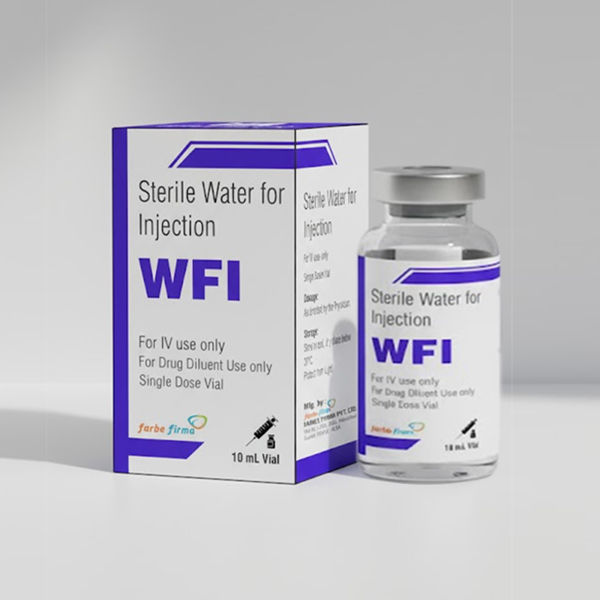
Levobupivacaine Injection
What is Levobupivacaine Injection?
Levobupivacaine is a long-acting amide-type local anesthetic and the pure $S(-)$-enantiomer of the racemic mixture bupivacaine. It was developed to offer the same powerful analgesic and anesthetic properties as bupivacaine but with a significantly improved safety profile. By isolating the $S$-isomer, the potential for central nervous system (CNS) and cardiovascular toxicity is reduced, making it a preferred choice for clinicians requiring long-duration blocks in high-risk patients.
Uses of Levobupivacaine Injection
Surgical Anesthesia: Used for major blocks such as epidural, spinal (subarachnoid), and peripheral nerve blocks for orthopedic, vascular, and abdominal surgeries.
Obstetric Analgesia: Widely used for labor pain management (epidural) and as an anesthetic for Cesarean sections.
Post-operative Pain Management: Administered via continuous infusion or intermittent bolus for prolonged analgesia after major surgery.
Ophthalmic Surgery: Used for peribulbar blocks in eye surgeries where long-lasting anesthesia is required.
Local Infiltration: Direct injection into the surgical site for wound pain control.
How Does Levobupivacaine Work?
Levobupivacaine works by reversibly blocking voltage-gated sodium channels in the nerve cell membrane. It prevents the influx of sodium ions, which is essential for the generation and conduction of nerve impulses. This halts the "pain signal" before it can reach the brain. Its specific $S$-enantiomer structure has a lower affinity for sodium channels in the heart and brain than the $R$-enantiomer, which explains its reduced toxicity compared to traditional bupivacaine.
FAQs on Levobupivacaine Injection
1. Is Levobupivacaine really safer than Bupivacaine?
Yes. Clinical data demonstrates that Levobupivacaine is less cardiotoxic and less likely to cause seizures if it accidentally enters the bloodstream. While the potency remains similar, the "safety margin" is wider, providing extra security during high-volume blocks.
2. How long does the anesthesia last?
It is a long-acting anesthetic. Depending on the concentration and site of administration, the effect can last anywhere from 3 to 9 hours. For post-operative pain, its effects can be extended significantly when used in a continuous pump.
3. Does it cause a motor block?
At higher concentrations (0.5% to 0.75%), it provides a profound motor block (muscle relaxation). At lower concentrations (0.125% or below), it provides "motor-sparing" analgesia, allowing patients to retain some muscle movement while remaining pain-free—an ideal setup for labor and early post-surgical walking.
Therapeutic Category
Anesthetics (Regional/Local Anesthetic - Amide type)
Looking for a reliable Levobupivacaine manufacturer?
Contact Farbe Firma Pvt. Ltd. for dossier support, registration assistance, and export supplies. We specialize in high-purity, sterile $S$-enantiomer anesthetics manufactured in our WHO-GMP compliant facility to meet global surgical standards.
Product Name
Levobupivacaine Injection
Trade Name
Levosyl
Available Strength
5 mg/ml
Packing
20 ml
Therapeutic Use
Local and regional anesthesia; acute pain management.